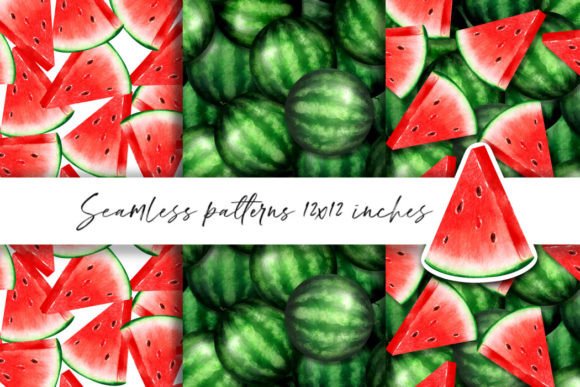
Watermelon. Seamless Patterns: A Versatile Tool for Creative and Professional Workflows
Watermelon. Seamless Patterns is a high-resolution digital paper design featuring seamless floral patterns with watermelons, available in a 3600 x 3600 pixel format at 300 dpi. This resource is ideal for a wide range of creative applications, from scrapbooking and card making to fabric design and wall art. Whether you're an artist, designer, or hobbyist, integrating this pattern into your workflow can enhance the visual appeal of your projects while maintaining professional quality.
Understanding Watermelon. Seamless Patterns
Watermelon. Seamless Patterns is more than just a decorative element; it's a functional asset that fits seamlessly into various creative and commercial processes. The design combines the vibrant colors of watermelon with elegant floral elements, creating a visually appealing texture that repeats without visible seams. This makes it perfect for backgrounds, borders, and other design elements where continuity is key.
The high resolution (300 dpi) ensures that the pattern remains sharp and clear even when printed on large formats, making it suitable for both digital and physical use. The 3600 x 3600 pixel size provides ample detail for intricate designs and allows for flexibility in scaling without losing quality.
Integration into Creative Projects
One of the most significant advantages of Watermelon. Seamless Patterns is its versatility. It can be used as a base layer in graphic design software such as Adobe Photoshop or Illustrator, allowing designers to build upon it with additional elements like text, illustrations, or photographs. This integration is particularly useful for creating cohesive themes across multiple project components.
For instance, if you're working on a series of invitations for a summer event, using Watermelon. Seamless Patterns as a background can unify the design language across all pieces. Similarly, in scrapbooking, this pattern can serve as a backdrop for photos, journaling, and embellishments, adding a touch of whimsy and freshness to the layout.
Preparation and Compatibility
Before incorporating Watermelon. Seamless Patterns into your workflow, ensure that your design software supports high-resolution images. Most modern graphic design tools handle large files efficiently, but it's always wise to check system requirements and optimize performance settings if needed.
Compatibility with different file formats is another consideration. While the pattern is provided in JPG format, converting it to PNG may be necessary if transparency is required. However, since the pattern is seamless, it’s often best to keep it as a solid image unless otherwise specified.
Workflow Applications Across Industries
In the realm of small business owners and entrepreneurs, Watermelon. Seamless Patterns can be a valuable asset for branding materials. From packaging design to social media graphics, this pattern can add a unique flair that aligns with a brand's identity while remaining adaptable to various contexts.
For educators and bloggers, this pattern can be used to create visually engaging content. Whether designing infographics, educational posters, or blog headers, the pattern adds a refreshing aesthetic that can capture attention and improve readability.
Freelancers and publishers might find it especially useful for creating templates, such as resume designs, proposal covers, or book layouts. The ability to customize the pattern with additional elements ensures that each project maintains a distinct look while benefiting from the underlying design.
Implementation Tips for Maximum Efficiency
To maximize efficiency, organize your digital assets by category. Create a dedicated folder for seamless patterns and subfolders for specific uses, such as "event design," "scrapbooking," or "branding." This organization not only saves time during the creative process but also helps maintain consistency across projects.
Additionally, consider using layer groups in your design software to separate the pattern from other elements. This practice allows for easier adjustments and ensures that the pattern doesn't interfere with other design components.
When working on print projects, always verify the color profile and resolution settings to ensure the final output matches your expectations. Testing the pattern on a small scale before committing to a full project can help identify any potential issues early on.
Long-Term Use and Quality Control
As with any digital asset, maintaining quality control is essential for long-term use. Regularly back up your files and store them in a secure location to prevent data loss. Additionally, keep track of any updates or variations of the pattern to ensure you're using the most current version for each project.
Over time, you may find that certain aspects of the pattern need to be adjusted to fit new projects or evolving trends. Being open to tweaking the design—such as adjusting brightness, contrast, or adding overlays—can help keep your work fresh and relevant.
Finally, consider building a library of patterns and textures that complement Watermelon. Seamless Patterns. Having a diverse collection can streamline your workflow and provide more options for future projects.
Whether you're a seasoned professional or just starting out, Watermelon. Seamless Patterns offers a practical and aesthetically pleasing solution for enhancing your creative and professional workflows. By understanding how to integrate it effectively, you can unlock new possibilities for your projects and achieve consistent, high-quality results.